


Cut: The Sparkle Factor
• The Cut is often considered the most important of the 4 Cs because it dictates the diamond's brilliance, fire, and scintillation—in other words, its sparkle. Unlike the other Cs, which are inherent to the stone, the Cut is determined by the skill of the diamond cutter. A well-cut diamond reflects light from one facet to another and disperses it back through the top, maximizing its visual impact.
• Summary of Cut: The cut grade evaluates the diamond's proportions, symmetry, and polish. The Gemological Institute of America (GIA) uses a scale from Excellent to Poor. An Excellent or Ideal cut ensures the best light performance, making the diamond appear lively and brilliant.
• Summary of Cut: The cut grade evaluates the diamond's proportions, symmetry, and polish. The Gemological Institute of America (GIA) uses a scale from Excellent to Poor. An Excellent or Ideal cut ensures the best light performance, making the diamond appear lively and brilliant.
Color: The Absence of Hue
• A diamond's Color grade evaluates the presence of yellow, brown, or gray tinting within the stone. In the world of fine jewelry, the highest-quality diamonds are virtually colorless. The GIA professional grading scale ranges from D (colorless) to Z (light yellow/brown).
• Summary of Color: The most sought-after grades are D, E, and F (Colorless). However, many choose G, H, I, and J (Near Colorless) as they often appear colorless to the unaided eye but offer a better value. The metal setting (e.g., platinum vs. yellow gold) can also influence how a diamond’s color is perceived.
• Summary of Color: The most sought-after grades are D, E, and F (Colorless). However, many choose G, H, I, and J (Near Colorless) as they often appear colorless to the unaided eye but offer a better value. The metal setting (e.g., platinum vs. yellow gold) can also influence how a diamond’s color is perceived.

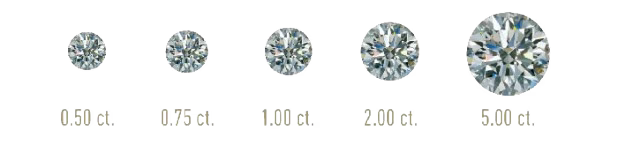
Carat Weight: The Measure of Size
• Carat is a unit of measurement for a diamond’s weight. One metric carat is defined as 200 milligrams. While many people mistake carat for size, it is a measure of weight, although a heavier diamond will typically appear larger. Two diamonds of the same carat weight can have different visual sizes depending on how the stone is cut.
• Summary of Carat Weight: Diamonds are weighed to the hundredth decimal place (e.g., 1.50 ct). Price increases exponentially with carat weight, as larger diamonds are significantly rarer. When selecting a carat weight, it's important to balance the size with the other three Cs to ensure overall beauty and value.
• Summary of Carat Weight: Diamonds are weighed to the hundredth decimal place (e.g., 1.50 ct). Price increases exponentially with carat weight, as larger diamonds are significantly rarer. When selecting a carat weight, it's important to balance the size with the other three Cs to ensure overall beauty and value.
Clarity: The Purity of the Stone
• Clarity is a measure of the presence of "inclusions" (internal characteristics) and "blemishes" (external characteristics). Almost all diamonds have small imperfections, which are essentially nature's fingerprints. The fewer and smaller these characteristics are, the higher the diamond’s clarity grade.

Shape of Diamonds

Asscher Diamonds
The asscher cut features a square shape with cut corners. A high crown with large step cut facets bestows more brilliance than the other popular step cut shape, the emerald shape. Asscher shaped diamonds are sleek and modern in solitaire settings, and their unique shape perfectly complements vintage-inspired styles.

Round Diamonds
Diamond shape refers to a diamond’s physical form, and is often one of the first attributes that couples consider when shopping for a diamond. While round diamonds are the most popular choice, many couples are also drawn to the distinctive look of non-round, or “fancy shaped” diamonds.

Princess Diamonds
Princess cut diamonds are the second most popular diamond shape. Princess cut diamonds possess the gorgeous sparkle of round brilliant diamonds in a distinctive square shape. They offer a contemporary look and the flexibility to work in almost any style of ring.

Cushion Diamonds
Cushion cut diamonds combine the appeal of a square cut diamond but with soft, rounded edges, lending this shape a romantic feel. This timeless shape is derived from the old mine cut, and has been refined over hundreds of years. Cushion cut diamonds are a beautiful choice for any setting style.

Emerald Diamonds
Emerald cut diamonds are treasured for their elegant silhouette. The shallow pavilion and crown accentuate the clarity of the stone, while the reflective steps enhance the color and luster of the diamond

Pear Diamonds
Pear shapes feature a rounded edge tapering to a point at the opposite end. This unique shape flatters fingers and offers a distinctive look. A fusion of the marquise shape and the most popular round brilliant cut, pear shaped diamonds are intended to showcase the sparkle of the diamond, making it important to find a stone with great symmetry.

Radiant Diamonds
The radiant cut diamond combines the silhouette of an emerald cut diamond with the fire and sparkle of a round brilliant cut diamond. Due to its design, this shape requires more carat weight in the depth to maximize brilliance.

Oval Diamonds
The ever-flattering oval shape is symmetrical and exhibits a similar fire and brilliance to round shaped diamonds. A scintillating twist on the classic round brilliant, the elongated shape can create the illusion of larger size. Oval diamonds are highly versatile, remarkably elegant, and distinctive.

Heart Diamonds
The heart shaped diamond is an evocative signifier of true love. They shimmer with two symmetrical halves, creating a bold and romantic look. Heart shaped diamonds are especially popular in Claddagh designs, and offer a distinctive look in any engagement ring setting.

Marquise Diamonds
The marquise shaped diamond features pointed ends with a curved middle for an eye-catching look. With a larger surface area than any other diamond shape, the marquise shape maximizes perceived size and lends a unique look to any setting style.
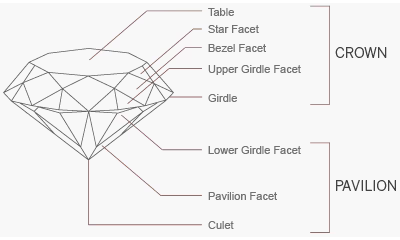
The Diamond Anatomy
A diamond is made up of two key sections, the Crown and the Pavilion. Their structure and relationship to each other in the form of table and depth percentages have the biggest impact on the diamond’s sparkle.
The round brilliant cut has been used as an example, because with most other diamond shapes (“fancy cut” diamonds) the cut grading is more complicated (hence why their cut grading does not appear on certificates such as GIA).
The round brilliant cut has been used as an example, because with most other diamond shapes (“fancy cut” diamonds) the cut grading is more complicated (hence why their cut grading does not appear on certificates such as GIA).
Diamond Care
Depending on the setting you choose, you can soak your diamond engagement and/or wedding rings for up to 30 minutes in a solution of dish washing liquid and water. This is best suited to prong and cathedral settings. In pave and basket settings, however, soaking the rings can increase the likelihood of the gems coming loose. Be mindful of this when you decide to soak any jewelry piece use mild dish soap in warm water and soak your jewelry for a few minutes. Using a soft cloth or cotton swab, gently scrub the metal (gold, platinum, silver) and then rinse. Repeat the process if necessary, but always proceed with caution when it comes to soaking jewelry.
